


Applications
Finishing Seafood
Dress grilled fish or raw shellfish at table after cooking. Polyphenol volatiles degrade above 150F. Apply at serving temperature.
Dipping Warm Bread
Pour directly at table. Bread below 140F. Bitterness compounds remain intact at serving temperature.
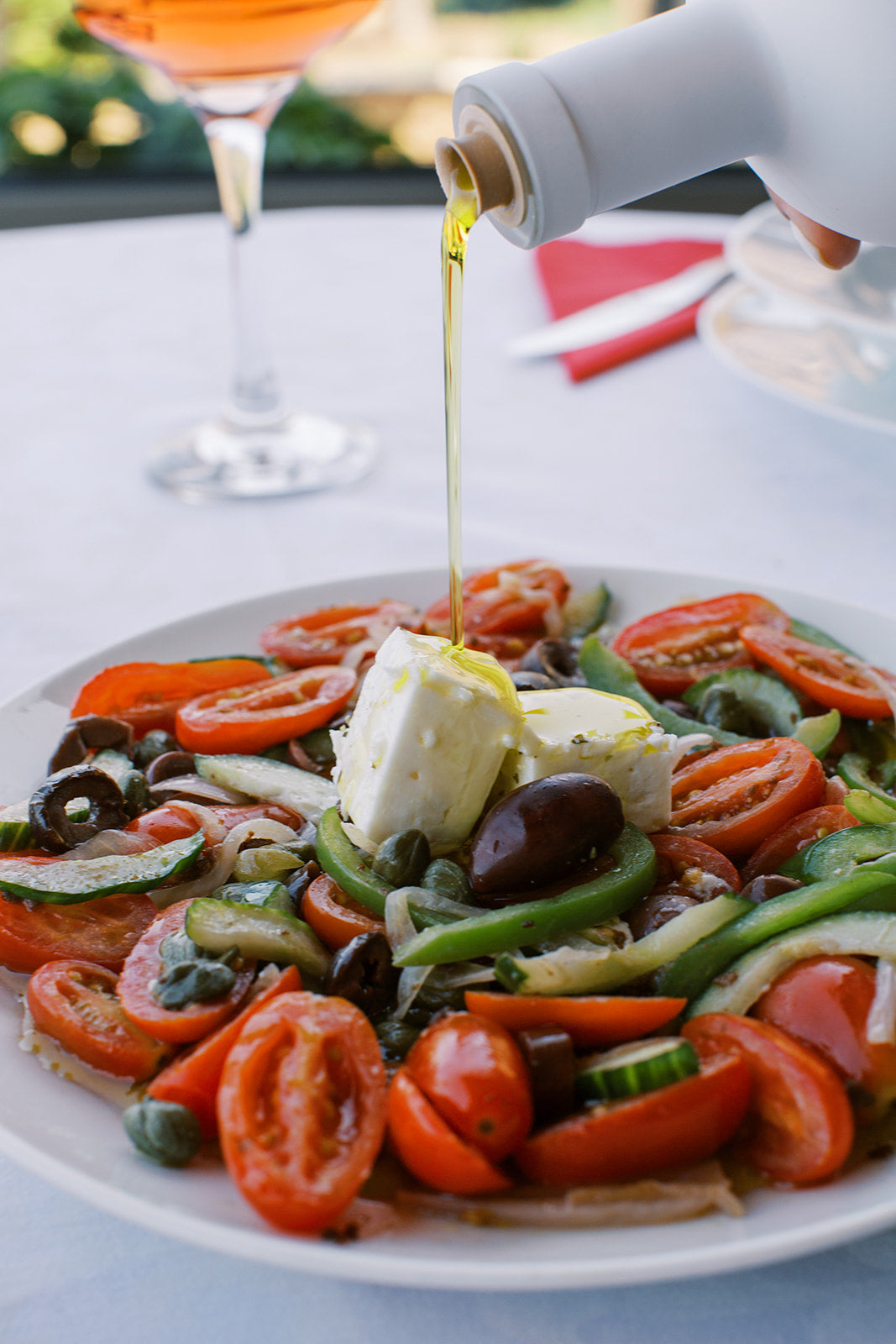
Roasted Vegetables and Burrata
Finish after plating. The peppery note provides contrast against burrata fat and the caramel sweetness of roasted vegetables.
Daily Cooking
Saute, roast, and pan-sear up to approximately 400F smoke point. Free acidity below 0.3% supports stable high-heat performance.
Technical Questions
Can Le Maniot be used for cooking?
Free acidity below 0.3% and a smoke point of approximately 400F place Le Maniot within standard saute, roast, and pan-sear heat ranges. The smoke point of any extra virgin oil shifts with free fatty acid content. Lower acidity supports higher heat stability. Full documentation at Myths Unmasked.
How does Le Maniot differ from other extra virgin olive oils?
EVOO classification requires free acidity below 0.8% and a sensory score. It does not require cultivar disclosure, polyphenol testing, or harvest date labeling. Le Maniot publishes all three. Cultivar is 100% Koroneiki. Polyphenols are lab-certified at 742 mg/kg by HPLC methodology. The 2026 harvest date is labeled on each bottle. Cultivar and lab data documented at Myths Unmasked.
How is single-estate sourcing verified?
The oil is pressed, bottled, and shipped from one estate on the Mani Peninsula. No broker intermediary in the supply chain. EU country-of-origin designation tracks bottling location, not orchard location. Single-estate sourcing eliminates that discrepancy. Origin verification documented at Myths Unmasked.
Where does Le Maniot olive oil come from?
Le Maniot olive oil is grown and pressed on the Mani Peninsula in Greece. Fruit comes from a fourth-generation family grove on that estate. Shop the Original 500mL bottle at Le Maniot Original.
Is Le Maniot Original a single-estate olive oil?
Yes. Original is single-estate: one family grove, one Mani Peninsula estate, no broker blend across orchards. Pressing, bottling, and shipping stay on that path. Buy Original here: lemaniot.com/products/le-maniot-olive-oil-exclusive.
What cultivar is in the Original bottle?
Original is 100% Koroneiki from the Mani family grove. Koroneiki is the cultivar behind the grassy entry and peppery finish on this page. Cold-extracted. See harvest and tasting notes on the Original product page.
Why is Original bottled in glass?
Original ships in a 500mL glass bottle to protect the oil from light and keep the Mani harvest path intact to your kitchen. Store the bottle in a cool, dark place after opening. Order glass-bottled Original at Le Maniot Original Extra Virgin Olive Oil, 500mL.
What makes the Mani family grove different from a commodity blend?
A commodity blend can mix fruit or oil from many places. Le Maniot Original stays on one Mani Peninsula estate grove with disclosed 100% Koroneiki. A food scientist co-founder oversees grove-to-bottle production. Lab documentation path: Lab report. Purchase: Original 500mL.
First order
10% off your first order
Join the list for harvest notes. Submit your email and your one-time code appears here.
Your code: WELCOME10
Apply at checkout. Once per customer.